High-Fidelity Arabic Speech Datasets
Arabic ASR demands extreme dialectal nuance. We provide ethically sourced, fully transcribed audio corpora covering Gulf, Levantine, Egyptian, and Maghrebi variations for commercial voice assistants, call-center analytics, and wake-word systems.
Solving the Arabic Diglossia Challenge in ML
Training effective Arabic Automatic Speech Recognition (ASR) systems requires navigating severe diglossia. Modern Standard Arabic (MSA) is used in formal broadcasts, but everyday communication—the data voice assistants and call centers actually process—happens in localized dialects. Generic, scraped data fails to capture these phonetic and lexical shifts.
Our Arabic Speech Datasets isolate and properly annotate regional dialects, code-switching (e.g., Arabizi), and domain-specific acoustic environments. We provide JSONL manifests mapping raw `.wav` files to human-verified text, demographic metadata, and timestamped speaker diarization.
DIALECT SPECIFICITY
Isolate models to precise regional variants to significantly reduce Word Error Rate (WER) across diverse MENA markets.
ACOUSTIC ENVIRONMENTS
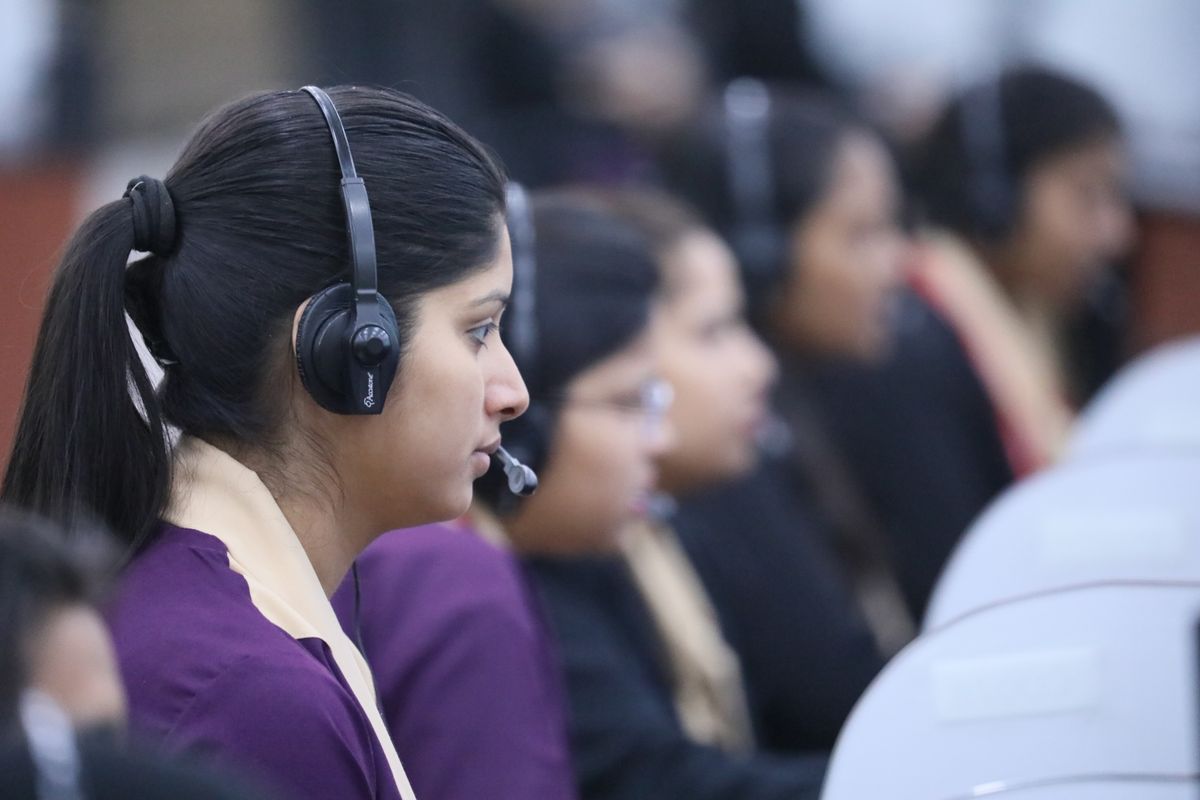
From high-SNR studio recordings for TTS to noisy 8kHz telephony data designed for robust call-center transcription.
Dialect Phonetics & ASR Challenges
Each Arabic dialect introduces unique phonological shifts, loanwords, and syntactical structures that directly impact speech recognition accuracy.
Gulf (Khaleeji)
Spoken across Saudi Arabia, UAE, Kuwait, Qatar, Bahrain, and Oman.
PHONETIC CHARACTERISTICS
Frequent pronunciation of 'qaf' (ق) as 'g' (e.g., 'galb' instead of 'qalb') and 'jeem' (ج) as 'y' in certain coastal regions. Strong retention of interdental fricatives (th, dh) which are lost in many other dialects.
ASR CHALLENGES
High intra-regional variability; heavy code-switching with English in business and technical contexts (Arabizi). Morphological changes like the suffix '-ish' for feminine pronouns.
Levantine (Shami)
Spoken in Lebanon, Syria, Jordan, and Palestine.
PHONETIC CHARACTERISTICS
Loss of interdental fricatives, shifting 'th' (ث) to 't' or 's', and 'dh' (ذ) to 'd' or 'z'. Pronunciation of 'qaf' (ق) as a glottal stop (hamza) in urban centers.
ASR CHALLENGES
Extensive vowel elision and complex consonant clusters. Vocabulary heavily influenced by Aramaic, French (in Lebanon), and English, creating out-of-vocabulary (OOV) hurdles for MSA-trained models.
Egyptian (Masri)
The most widely understood dialect due to media dominance.
PHONETIC CHARACTERISTICS
Distinctive pronunciation of 'jeem' (ج) as a hard 'g' (geem) in Cairene. 'Qaf' (ق) usually becomes a glottal stop. Interdentals shift to dentals or sibilants.
ASR CHALLENGES
Unique circumfix negation (ma...sh) changes sentence structures entirely. Sharp differences between urban Cairene and rural Sa'idi (Upper Egypt) require careful acoustic balancing in training data.
Iraqi & Mesopotamian
Spoken in Iraq, eastern Syria, and parts of Iran.
PHONETIC CHARACTERISTICS
Often changes 'k' (ك) to 'ch' (tʃ) and 'qaf' (ق) to 'g'. Retains interdentals like Gulf Arabic but features a distinct, heavier intonation.
ASR CHALLENGES
Rich substrate of Akkadian, Persian, and Turkish loanwords. The presence of non-standard consonants (p, v, ch) not found in the Arabic alphabet requires customized acoustic models.
Maghrebi (Darija)
Spoken in Morocco and Algeria.
PHONETIC CHARACTERISTICS
Extreme vowel reduction, practically eliminating short vowels. 'Qaf' is often pronounced as 'q', 'g', or 'k'. Strong Berber (Amazigh) syntactic influence.
ASR CHALLENGES
Highly complex phonotactics allowing long consonant clusters impossible in MSA. Pervasive, mid-sentence code-switching with French makes it one of the hardest dialects for ASR.
African Variants: Tunisian, Libyan, Sudanese
Distinct transitional and localized dialects across North and East Africa.
PHONETIC CHARACTERISTICS
Tunisian/Libyan: Tunisian retains some interdentals; Libyan shows strong Bedouin influence with conservative 'qaf'. Sudanese: Similar to Egyptian but retains 'jeem' (j) and lacks the glottal stop for 'qaf' in many areas.
ASR CHALLENGES
These are critically under-resourced dialects. Sudanese faces tonal influences from local African languages, while Tunisian blends Italian and French loanwords uniquely. ASR requires deep, region-specific corpora.
Dataset Variations & Specifications
| DATASET TYPE | AUDIO SPECS | PRIMARY USE CASE |
|---|---|---|
| Gulf Conversational ASR | 16kHz, Spontaneous, Diarized | Smart Assistants, Conversational AI in KSA/UAE |
| Telephony / Call-Center | 8kHz, Noisy Environment, Mixed Dialect | Customer Service Analytics, Intent Classification |
| Wake-Word & Command | 16kHz, Far-field, Short utterances | IoT Devices, Automotive Voice Control |
| Medical / Financial Speech | 16kHz, Domain-specific vocabulary | Specialized Dictation, Compliance Monitoring |
Procure Arabic Speech Data
Contact our team to request JSONL metadata samples, audio snippets, and volume pricing.