Finnish Speech Datasets: Master Agglutinative AI
Engineered for the unique complexity of the Finnish language. From the strict rules of vowel harmony to the infinite variations of agglutinative suffixing, our datasets provide the phonetic density required for precision Finnish ASR and TTS.
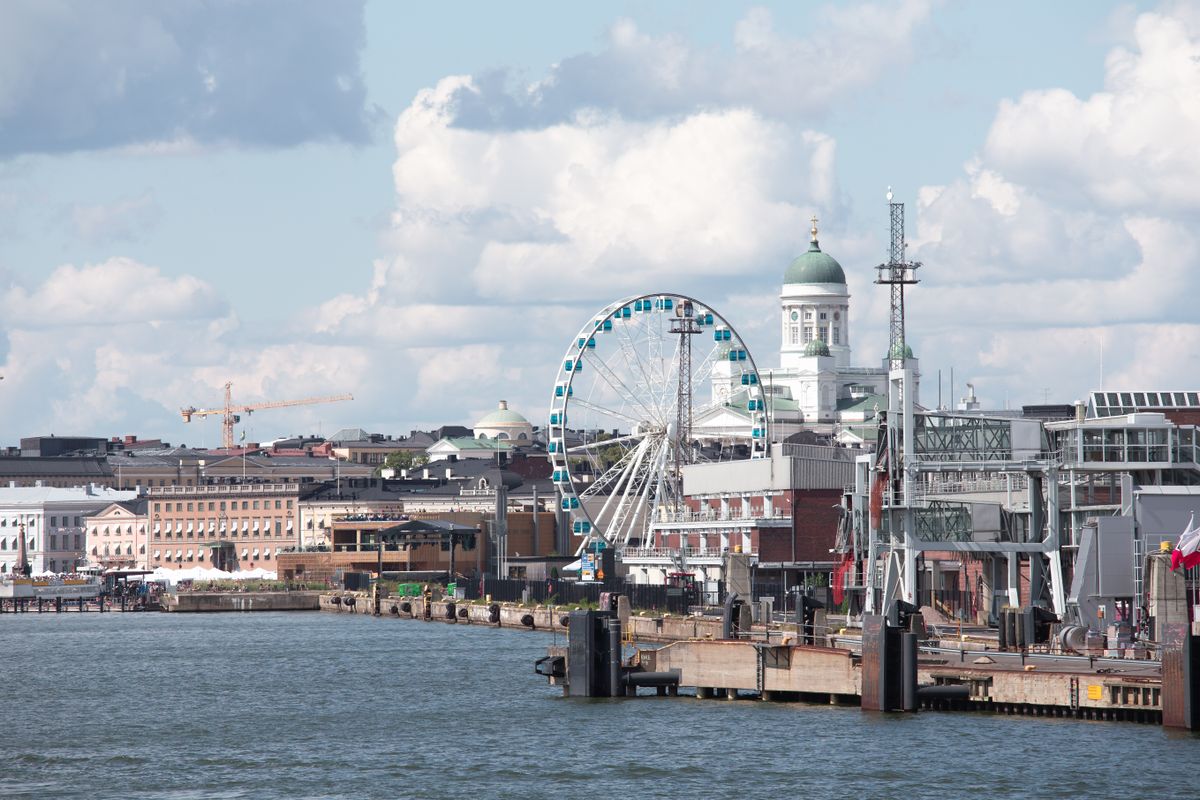
Operations Base
Helsinki, Finland
Our data collection hub for standard Finnish and urban dialects, ensuring high-fidelity conversational audio for enterprise applications.
Finnish ASR: Solving the Morphological Maze
Finnish is a non-Indo-European language belonging to the Uralic family. For speech technology, it presents a unique set of challenges fundamentally different from Slavic or Germanic languages. At NLPC, our Finnish datasets are designed specifically to handle the "morphological explosion" characteristic of agglutinative languages.
Agglutination & Lexical Density
In Finnish, grammatical relationships are expressed through long chains of suffixes attached to a root. A single word can express what an English sentence would take 5-6 words to achieve. This leads to a massive vocabulary size that conventional word-based ASR models cannot manage. Our datasets utilize morphological segmentation and sub-word modeling to allow AI to learn the logic of suffixation rather than memorizing billions of word forms.
Vowel Harmony: The Phonetic Guardrail
Finnish vowels are categorized into back (a, o, u), front (ä, ö, y), and neutral (e, i). A word can contain either back vowels or front vowels, but never both. This phonological constraint acts as a natural error-correction mechanism for speech recognition. Our acoustic models are trained to recognize these harmonic shifts, providing a robust layer of predictive accuracy for connected speech.
Consonant Gradation
The roots of Finnish words undergo systematic changes in their consonants when suffixes are added (e.g., pankki becomes pankin). This "gradation" changes the phonetic profile of the root itself. Our high-resolution audio capture and time-aligned transcripts ensure that models correctly map these root-level transformations to their underlying grammatical meaning.
Standard vs. Spoken Finnish
There is a significant gap between Kirjakieli (the formal written standard) and Puhekieli (everyday spoken Finnish). Spoken Finnish features heavy elision and shortening of words. We provide balanced corpora containing both formal dictate and informal conversational speech to ensure your AI works in real-world environments, not just in sterile test conditions.
Technical JSON Metadata Sample
{
  "dataset_id": "NLPC-FI-ASR-2024",
  "language": "fi-FI",
  "morphology": "Agglutinative",
  "vowel_harmony": true,
  "segmentation": "Sub-word / Morphological",
  "samples": [
    {
      "audio_id": "FI_00124",
      "text": "Taloissammekohan",
      "analysis": {
        "root": "talo (house)",
        "plural": "-i-",
        "inessive": "-ssa- (in)",
        "possessive": "-mme- (our)",
        "clitic_1": "-ko- (question)",
        "clitic_2": "-han- (wondering/emphasis)"
      },
      "translation": "I wonder if in our houses..."
    }
  ]
}
Dataset Profile
- Language Finnish (fi-FI)
- Total Hours 2,500+ Spoken
- Family Uralic (Finnic)
- Morphology Agglutinative
- Cases 15 Distinct Cases
Regional Relations
Baltic & Uralic Hub
Compare Finnish datasets with Estonian and Hungarian counterparts.
Estonian Datasets
The closest relative to Finnish. Explore mutual intelligibility and ASR transfer learning.
Hungarian Datasets
A distant Uralic relative with similar agglutinative complexity but different vowel harmony rules.