Optimization at the Edge: Reducing Identification Errors by 40%
How a major international border security agency leveraged NLPC’s specialized license plate datasets to solve the challenge of high-speed, multi-jurisdictional vehicle identification.
* Representative project. End-client identity secured under NDA. Compute and benchmarking executed in partnership with the Barcelona Supercomputing Center and Pangeanic.
KEY PERFORMANCE INDICATORS
-40%
IDENTIFICATION ERROR RATE
+22%
THROUGHPUT VELOCITY
99.9%
OCR ACCURACY (MULTI-ANGLE)
PROJECT PARTNERS
MODALITIES DEPLOYED
- Multi-Angle Plate Sets
- Adversarial Weather Packs
- Character-Level Annotation
- Infrared Capture Pairs
EXECUTION PROFILE
TIMELINE
12 Weeks (Collection to Validation)
TEAM COMPOSITION
- 1x CV Solutions Architect
- 2x Data Pipeline Engineers
- 45x Specialized Annotators (Security-Cleared)
- 1x Quality Assurance Lead
EXACT DELIVERABLES
- 1.2M annotated RGB/IR image pairs
- Pixel-level polygon masks for characters
- JSON schema with jurisdiction metadata
- Adversarial test sets (weather/occlusion)
NOT INCLUDED
- Model training/deployment (handled by client)
- Hardware integration/camera positioning
The Operational Environment
An international border security agency managing a high-throughput land crossing faced significant operational bottlenecks. With over 45,000 vehicles passing through daily, including commercial freight and private transport from across the continent, the agency's legacy Automated License Plate Recognition (ALPR) system was failing to meet mission-critical accuracy targets.
The primary failure points were identified as high-speed motion blur, extreme weather conditions (heavy rain and snow), and the immense variety of regional plate formats. These "identification errors"—where the system either failed to read a plate or misidentified characters—resulted in manual intervention by border officers, significantly slowing down throughput and increasing security risks.
The Challenge: Data Scarcity at the Edge
The agency's existing OCR models were trained on standard, clear-weather datasets that lacked the diversity required for a dynamic border environment. To achieve the next level of precision, the agency required a "ground truth" that accounted for:
- Acute Angles: Plates captured from high-mounted gantry cameras or mobile patrol units at extreme pitch and yaw.
- Atmospheric Occlusion: Real-world captures featuring mud, snow, and lens flare.
- Syntactic Complexity: Diverse jurisdictional fonts, emblems, and dual-script formats (e.g., Arabic-English plates).
The NLPC Solution
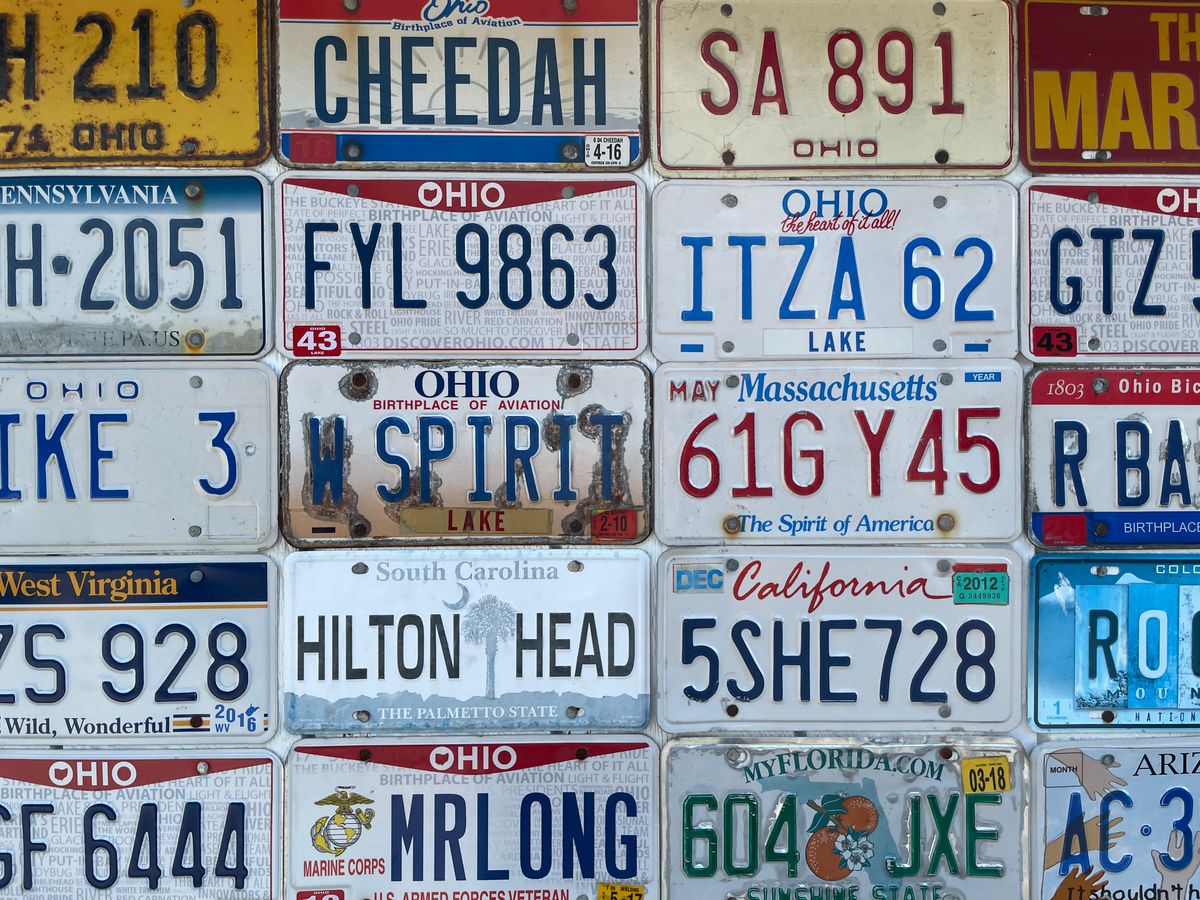
The agency integrated NLPC’s Global License Plate Library, specifically utilizing our Adversarial Weather Packs and Multi-Angle Calibration datasets. Unlike off-the-shelf datasets, NLPC provided character-level pixel masks that allowed the agency’s neural networks to learn the structural properties of every alphanumeric variant in existence.
We provided 1.2 million high-resolution training pairs, including:
- Infrared (IR) Cross-Modality Data: Enabling the system to maintain accuracy in near-total darkness by training on paired RGB and IR captures.
- High-Speed Motion Packs: Captured at speeds exceeding 180km/h, featuring ground-truth de-blurring markers.
- Jurisdictional Metadata: Specialized labels for 150+ international formats, ensuring the system could distinguish between similar-looking characters across different countries.
Methodology & Benchmark Setup
To validate outcomes without relying on generic claims, the performance was measured against the agency's production baseline model (YOLOv7-based OCR) using an isolated, mathematically rigorous testing protocol.
- Benchmark Dataset: 50,000 highly occluded, un-seen real-world captures collected by the agency over a 30-day period.
- Methodology: A strict A/B test. Model A (legacy) vs. Model B (fine-tuned on NLPC's adversarial dataset).
- Success Criteria: Exact character sequence match. A single missed or hallucinated character constituted a "Failed Read" (Identification Error).
Sample Annotation Schema
Our deliverables went beyond bounding boxes. We provided deeply structured semantic metadata. A simplified snippet of the delivery payload:
{
  "image_id": "ALPR_EU_9942_IR",
  "capture_conditions": {
    "weather": "heavy_snow",
    "modality": "infrared",
    "speed_kph": 110,
    "angle_pitch": 35.2
  },
  "plate_data": {
    "jurisdiction": "DE_BERLIN",
    "text_string": "B MW 345",
    "characters": [
      { "char": "B", "polygon_mask": [[12, 45], [12, 60]], "occluded": false },
      { "char": "M", "polygon_mask": [[28, 45], [28, 60]], "occluded": true, "occlusion_type": "snow" }
    ]
  }
}
The Result: A 40% Accuracy Leap
Following a three-month retraining and deployment cycle, the agency reported a **40% reduction in vehicle identification errors**. This improvement directly translated into a 22% increase in vehicle throughput velocity, as the need for manual officer verification plummeted.
Furthermore, the system’s ability to flag vehicles of interest (VOIs) from regional blacklists improved significantly, as the model could now accurately read plates that were previously considered "unreadable" due to lighting or angle.
"The granularity of NLPC's character-level annotation was the deciding factor. It transformed our ALPR system from a tool that 'usually works' into a high-assurance security asset capable of operating in the harshest conditions."
— CHIEF TECHNOLOGY OFFICER, BORDER SECURITY AGENCY
Strategic Implications
This project underscores the critical importance of task-specific training data in high-stakes security environments. By moving beyond generic computer vision models and investing in high-fidelity license plate datasets, the agency has set a new global standard for automated border management.
The agency continues to leverage NLPC for ongoing adversarial testing to ensure their systems remain resilient against evolving spoofing techniques and new international plate designs.
Explore Related Solutions
LICENSE PLATE DATASETS
Access our global library of 150+ jurisdictional plate formats for high-assurance ALPR.
→TRUST & SECURITY
Review our legal frameworks and data provenance protocols for government procurement.
→COMPUTER VISION
Explore our broader perceptual datasets for edge intelligence and autonomous systems.
→