Polish Speech Datasets for Deep Neural ASR
Polish is widely recognized as one of the most phonetically and morphologically complex Slavic languages. From the distinct nasalization of ą and ę to the dense sibilant clusters (szeleszczenie), our datasets are engineered to provide the high-density acoustic markers required for state-of-the-art speech recognition.
Phonetic & Sibilant Precision
Nasal Vowel Modelling (ą, ę)
Polish is unique among modern Slavic languages for retaining its nasal vowels. Our datasets capture the precise phonetic realization of ą and ę, including their asynchronous nature where nasalization is often realized as a nasal glide [w̃]. Precise labelling of these vowels is critical for avoiding word-level errors in legal and medical transcripts.
Sibilant Cluster Resilience
The "sh-sound" complexity in Polish is unmatched. We distinguish between the retroflex sz, cz, ż and the alveolo-palatal ś, ć, ź. Our corpora provide dense examples of minimal pairs to train models to accurately segment these high-frequency spectral markers, preventing the common "hissing" error in lower-quality datasets.
7-Case Morphological Alignment
With 7 cases, 3 genders, and complex plural forms, Polish morphology demands vast vocabularies. Our data is balanced across all declension patterns (Nominative through Vocative) and includes intensive coverage of personal-masculine plural forms to ensure the language model correctly predicts word endings in spontaneous speech.
Comprehensive Polish Linguistic Engineering
The Polish language, with over 45 million speakers worldwide, represents a critical frontier for European ASR (Automatic Speech Recognition) and LLM (Large Language Model) development. However, the standard "off-the-shelf" datasets often fail to capture the nuanced phonetic and morphological traits that make Polish unique. At NLP Consultancy, we recognize that the quality of your AI is directly proportional to the resolution of your training data. This document outlines our specialized approach to engineering Polish speech corpora that exceed industry standards for accuracy, diversity, and technical depth.
The Nasal Vowel Paradox: ą and ę
Unlike its Slavic neighbors such as Czech or Ukrainian, Polish has retained the Proto-Slavic nasal vowels. These are not simple single-phoneme realizations but complex, environment-dependent sounds. The vowel ą is typically realized as [ɔ̃], while ę is [ɛ̃]. However, in spontaneous speech, these nasals undergo significant transformation. Before stop consonants, they decompose into a vowel followed by a nasal consonant (e.g., mąka [mɔŋka], ręka [rɛŋka]). At the end of words, the nasalization of ę is often lost entirely in casual speech (widzę becoming [vidzɛ]).
Our datasets provide high-density sampling of these environments. We don't just record people speaking; we curate scripts that force the articulation of these nasals in diverse phonological contexts. This allows acoustic models to learn the "nasal glide" effect, where the air flow shifts from the oral to the nasal cavity mid-articulation—a feat that requires high-sampling-rate audio (48kHz+) to distinguish clearly from background noise or generic vowel shifts.
Sibilant Clusters and the "Hissing" Spectrum
Polish phonology is famous (or perhaps infamous) for its sibilants. The language maintains a three-way distinction between alveolar (s, z, c, dz), retroflex (sz, ż, cz, dż), and alveolo-palatal (ś, ź, ć, dź) sibilants. To an untrained ear—or an under-trained model—these sounds can blend into a generic "hiss." However, for a Polish speaker, the difference between prosi (asks) and proszy (archaic root) is as clear as day.
The technical challenge in ASR is the spectral overlap between these sibilants. Alveolo-palatals have a higher concentration of energy in the 5-8kHz range, while retroflex sibilants sit lower. Our recordings utilize high-fidelity condenser microphones to ensure that these spectral "fingerprints" are preserved. Furthermore, Polish allows for sibilant-on-sibilant clusters like in szczęście [ʂtʂɛɲɕt͡ɕɛ] (happiness), where a retroflex cluster is immediately followed by an alveolo-palatal one. Our datasets include intensive "stress-test" scripts containing these dense clusters to ensure your models don't collapse these distinctions in high-noise environments.
Morphological Complexity: The 7-Case Grid
Morphology is where Polish truly challenges the "Language Modelling" side of ASR. Polish is a highly fusional language with seven grammatical cases: Nominative, Genitive, Dative, Accusative, Instrumental, Locative, and Vocative. Each noun, adjective, and pronoun must decline according to these cases, as well as number (singular/plural) and gender (masculine personal, masculine inanimate, feminine, neuter).
The practical implication for AI is a massive explosion in word forms. A single English word like "green" has one form; the Polish equivalent zielony has dozens of forms depending on the case, gender, and plurality of the noun it modifies. If your training data is biased toward the Nominative case (the default form found in most web-scraped text), your model will fail to recognize the endings of words in real conversational contexts.
Our approach involves Morphological Balancing. We analyze our transcripts to ensure that all seven cases are represented according to their natural frequency in the Polish language, with specific "boosts" for rarer forms like the Vocative or the Instrumental. This ensures that the language model (LM) or the decoder of an end-to-end ASR system has a high prior probability for correctly identifying the trailing phonemes of declined words, which are often the most acoustically weak part of the utterance.
Palatalization and Consonant Voicing
Beyond sibilants, palatalization affects nearly every consonant in the Polish inventory. Consonants can be "hard" or "soft," a distinction that completely changes the meaning of a word (e.g., pasek 'belt' vs. piasek 'sand'). Our data collection protocols require speakers to articulate these "soft" markers clearly, and our transcribers are trained to flag any "de-palatalization" that occurs in fast or lazy speech.
Voicing is another critical area. Polish, like many Slavic languages, features word-final devoicing (where a 'd' at the end of a word sounds like a 't') and voicing assimilation in clusters. When a voiced consonant sits next to an unvoiced one, it often takes on the voicing quality of its neighbor. For an ASR system to be verbatim-accurate, it must understand these phonological rules. We provide phonetic-level alignment for a subset of our corpora to help developers train models that can "see" through these surface-level acoustic changes to the underlying orthographic reality.
Dialectal Breadth: From Silesia to the Tatras
While "Standard Polish" is the target for most general-purpose systems, regional variations are significant. The Silesian dialect (śląska mowa) in the south features heavy lexical and phonetic influence from German, including different vowel timbres and specific "mazurzenie" (the collapsing of retroflex sibilants into alveolar ones).
In the southern highlands (Podhale), the "Góralski" dialect retains archaic features and a distinct melodic rhythm that can baffle models trained only on Warsaw news broadcasts. Our regional collections include thousands of speakers from across Poland's 16 voivodeships, ensuring that your system is robust enough for a delivery driver in Katowice, a doctor in Gdańsk, and a tourist in Zakopane.
Data Ethics and Technical Specifications
Finally, every hour of Polish speech we provide is collected under strict ethical guidelines. We ensure full GDPR compliance and "Right to be Forgotten" protocols. All speakers are compensated fairly and provide informed consent for their data to be used in AI training. Technical specifications are uncompromising: uncompressed PCM WAV format, 24-bit depth, and a minimum of 48kHz sampling to capture the full sibilant spectrum.
By combining deep linguistic expertise with high-fidelity recording and rigorous morphological balancing, NLP Consultancy provides the most technically advanced Polish speech datasets available on the market today. Whether you are building a voice-controlled automotive system for the Polish market or fine-tuning a massive Slavic LLM, our data provides the precision you need.
Regional Polish Dialects
We sample across all 16 voivodeships to ensure your models are robust against regional phonetic shifts and lexical variations.
Standard Polish
The standard for media, education, and professional settings. Clean articulation with balanced gender and age distribution for baseline ASR training.
- Media-Ready Accuracy
- 2,500+ Unique Speakers
Silesian Region
Significant lexical and phonetic markers. Essential for systems operating in industrial hubs like Katowice or Gliwice.
- Specific Dialectal Lexis
- Industrial Domain Data
Northern Influences
Capturing the unique phonetic rhythms of the Pomeranian region. Vital for regional dialectal robustness in coastal urban centers.
- Maritime Lexical Sets
- Regional Prosody Markers
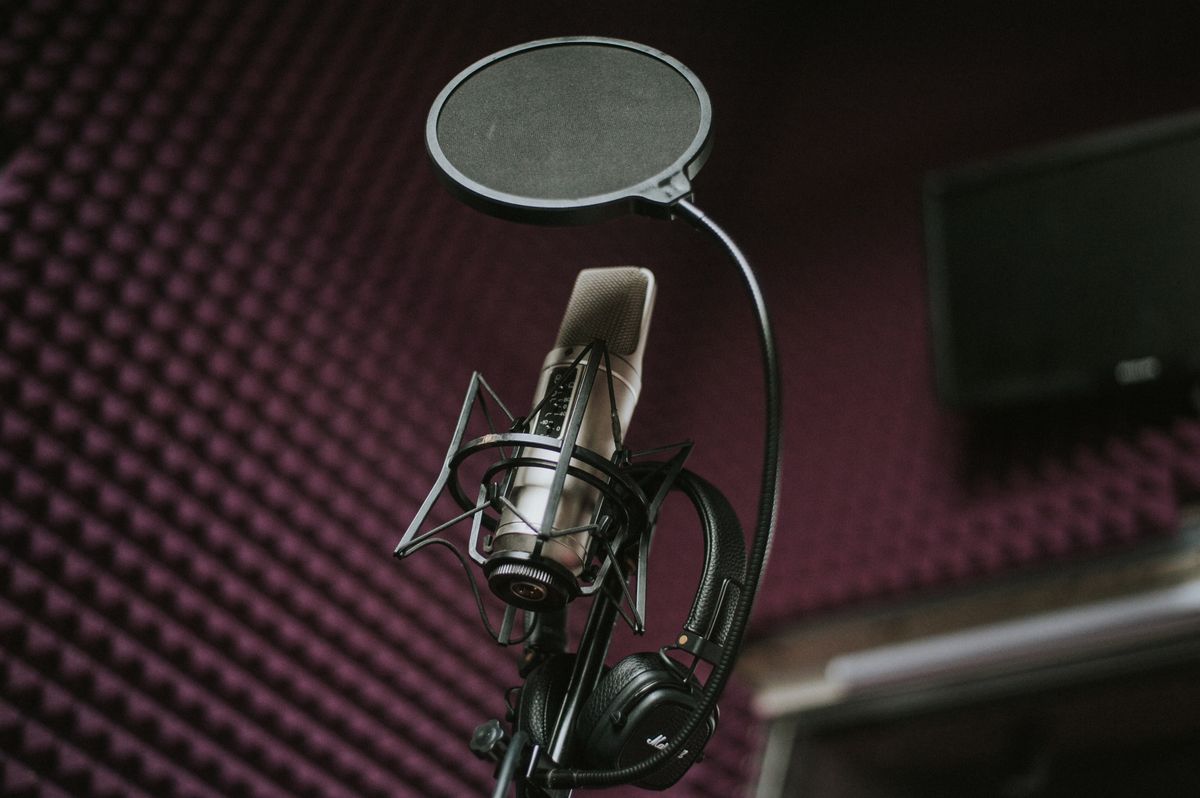
Polish Signal Processing
AUDIO_QUALITY // LOSSLESS_PCM
Polish Dataset Architecture
{
  "dataset": "Polish-Speech-Advanced-2026",
  "technical_compliance": {
    "sampling_rate": "48kHz / 96kHz High-Res",
    "bit_depth": "24-bit Lossless",
    "transcription": "Verbatim Human (2nd stage validated)",
    "character_encoding": "UTF-8 / ISO-8859-2"
  },
  "linguistic_distribution": {
    "nasal_vowel_markers": "ą, ę (Verified in segments)",
    "sibilant_classification": "Sz/Cz vs Ś/Ć (Spectral tagging)",
    "morphological_cases": "Balanced 7-case coverage",
    "speaker_diversity": "Urban/Rural, 18-75 age range"
  }
}
Scale Your Polish ASR Capability
Connect with our Slavic language engineers to discuss custom collection in Polish, Ukrainian, and Czech variants.